
Reviewed · ROCKY MOUNTAIN NATIONAL PARK TOURS
Rocky Mountain National Park Tour – Winter In The Park – Estes Park Guided Tours
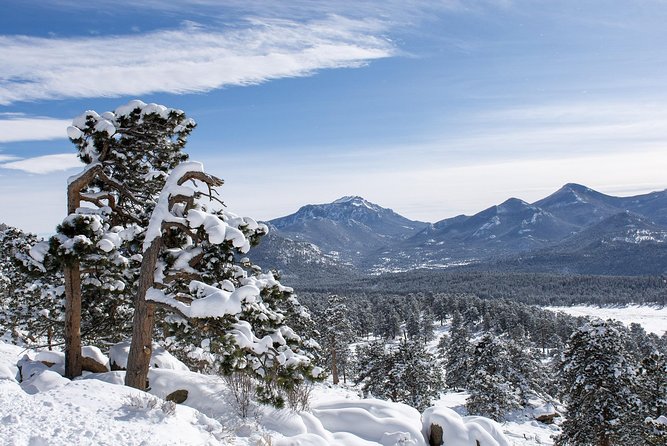
Snow turns RMNP into a different kind of day. This winter tour from Estes Park helps you aim for the best views and wildlife spots while a guide works around winter road reality.
I especially like that the National Park Pass comes included with your ticket, so you do not waste time figuring out entry rules. The one consideration: the tour does not provide transportation, so you’ll need to follow behind the guide to reach the viewpoints.
In This Review
- Key Points Before You Go
- Why the Winter Version of Rocky Mountain National Park Feels Different
- Starting at Estes Park Visitor Center: Quick Entry, Clear Focus
- Winter Road Reality and Wildlife Chances (That Radios Help With)
- Stop-by-Stop: Frozen Waterfalls and Long’s Peak Lookout
- Sprague Lake Frozen-Lake Walk: Quiet Steps and Moose-Moment Potential
- Group Size, Guide Support, and Staying Steady on Ice
- Price and Value: What $102.56 Actually Covers
- Who Should Book This Winter Tour (And Who Might Skip It)
- Should You Book This Winter in the Park Tour?
- FAQ
- How long is the Rocky Mountain National Park winter tour?
- Is a park pass included in the price?
- Do I need a timed-entry ticket for the park?
- Do you provide transportation to Rocky Mountain National Park?
- What is the maximum group size?
- Can I travel in my own vehicle?
- What happens if the tour is canceled due to poor weather?
Key Points Before You Go
- Park pass included with admission, so you skip the extra timed-entry stress
- Small group cap of 14 helps you stay together and hear directions in winter
- 2-way radios included for clear communication, especially if you drive your own vehicle
- Wildlife-first planning boosts your chances of seeing animals in colder conditions
- Classic winter stops like a frozen waterfall, Long’s Peak lookout, and Sprague Lake
- Short, photo-friendly walks on ice with help from the guide when footing gets tricky
Why the Winter Version of Rocky Mountain National Park Feels Different
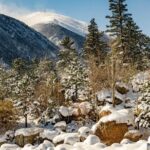
Winter changes Rocky Mountain National Park in ways you can feel fast: fewer people, quieter trails, and a natural “pause button” over meadows and valleys. Instead of rushing between big sights, this tour is built for slower moments—snowy viewpoints, frozen water features, and the kind of wildlife spotting you can’t reliably do on your own.
I like that the tour is honest about winter driving challenges. In winter, some roads are closed, and what looks close on a map can be a detour in real life. Having a guide route you through the areas that are workable that day keeps your time focused on scenery and animals, not on re-planning.
You also get a guide-led pace that makes winter easier to handle. Several guides on this tour—like John, Ben, JJ, and Jeremiah—are described as patient with groups, taking time for photos, and helping people stay steady on ice. That matters, because winter hikes here are usually short, but still on slick ground.
More of the park, gateway to the high peaks
Starting at Estes Park Visitor Center: Quick Entry, Clear Focus
Your tour starts at the Estes Park Visitor Center, where you begin with the basics and get your park admission handled. This is not a minor detail—winter timing is everything, and having your entry sorted helps you get out to the good stuff sooner.
You’ll also be set up for winter conditions right away. Your ticket is a mobile ticket, and you receive confirmation at booking, which makes it simpler than juggling paperwork on a cold morning. From there, the guide leads the group toward the park and the day’s best stops.
One of the bigger value points here is the ticket bundle: it includes admission to the park through the National Park Pass. If you’ve ever tried to figure out how winter entry rules work while you’re standing outside in freezing air, you’ll appreciate this kind of friction-free start.
Also note the practical stuff: the tour is capped at 14 travelers, so you’re not fighting for space in parking areas or at overlooks. And if you’re traveling with a service animal, the experience allows them.
Winter Road Reality and Wildlife Chances (That Radios Help With)
Winter in the Rockies rewards two things: good timing and staying together. A lot can change quickly—weather shifts, road closures, and the distance between sightings. This is where the included 2-way radios really help.
The radios are especially useful if you choose the option to travel in your own vehicle. In that setup, you follow along and communicate with the guide instead of trying to guess where the group is turning next. Even if you’re not in your own car, having a way to coordinate means the group can adjust without chaos.
This tour is also built around a simple goal: maximize your chances of seeing winter wildlife. That does not mean you get wildlife guaranteed, but it does mean you spend time where animals are more likely to show up and where the guide can respond when sightings happen.
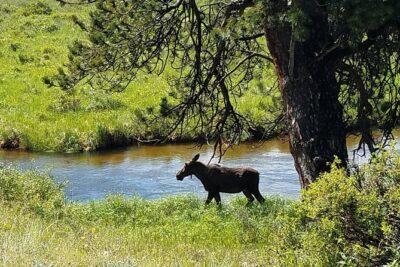
From the descriptions, you might have moments like seeing a moose feeding near the water—exactly the kind of winter scene that’s hard to set up without local guidance. And because winter gives you fewer crowds, when an animal appears, you can usually spend real time watching without the usual viewing crush.
The other practical win: a local guide can explain what you’re seeing and what’s going on in the area—wildlife behavior, forest and fire context, and what to look for during the colder months. That turns a quick photo stop into something you actually understand.
Stop-by-Stop: Frozen Waterfalls and Long’s Peak Lookout
The route is designed for classic winter sights, and you get a mix of icy features plus big views. One of the most memorable stops described is a frozen waterfall, where you can see how winter transforms water into texture—more sculpture than trickle.
From there, the tour can head toward a lookout of Long’s Peak with a view back over the park below. Long’s Peak is one of the most recognizable names in this region, and in winter the perspective can feel even more dramatic because the snow makes the terrain read clearly.
A key benefit of these kinds of stops is that they often give you different “types” of photos: tight ice detail (frozen features), wide mountain composition (Long’s Peak framing), and the layered sense of depth created by snow-covered valleys.
There’s also a comfort factor in how the tour tends to operate at these viewpoints. Guides like John and Ben are described as giving people time for pictures and helping manage the tricky footing. In other words, it’s not a sprint through the cold.
One consideration: winter weather can change plans fast, and roads that were workable earlier can become unsafe. This is part of why your guide is running the route. You’ll likely feel that the stops are chosen based on conditions that day rather than a fixed script.
Sprague Lake Frozen-Lake Walk: Quiet Steps and Moose-Moment Potential
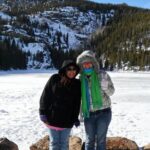
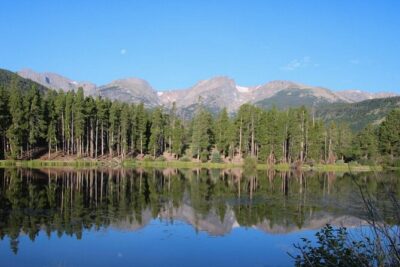
A standout stop on this winter tour is Sprague Lake, where you can walk on the frozen lake. This is the kind of experience that feels small until you’re standing on the ice—then it turns into one of those “only in winter” moments.
What I think makes this stop especially valuable is the combination of stillness and wildlife possibility. Winter crowds are thinner, which means you’re often taking in the view with less noise and fewer interruptions. Several people also highlight the chance of seeing animals, including moose feeding near the lake.
If you’re thinking about what to expect, plan for a winter walk that’s more about atmosphere than distance. The descriptions lean toward short walks with quiet time to look around and photograph.
This is also where the guide support matters. In winter, slick ice is the main hazard. Guides have been described as assisting people so they do not slip and giving enough time to take photos without rushing. That’s a practical difference between watching your footing the whole time versus enjoying the view.
Group Size, Guide Support, and Staying Steady on Ice
With up to 14 travelers, you get the best of both worlds: small enough to feel guided, large enough to make the experience social. In winter, that matters because you’re often dealing with crowded parking areas, narrow pull-offs, and group movement on snow.
You’ll also likely feel the benefit of having a guide who sets a calm tone. People mention guides being patient and kind, taking time for pictures, and helping the group navigate ice. If you’ve ever been on a winter hike where everyone moves at a different speed, you’ll appreciate a guide keeping the group working together.
A few practical thoughts for you:
- Wear footwear with real traction for ice. If you own ice cleats, this is a good use-case.
- Dress in layers so you can regulate heat when you pause for photos.
- Bring a warm hat and gloves even if the day starts bright. Cold winds can sneak in.
Also, because this is a winter park experience, you’ll spend time outdoors. That can be wonderful—quiet, snowy air, and the chance to see animals moving in ways you don’t catch in summer—but you want to be set up for cold.
More days out in the snow
Price and Value: What $102.56 Actually Covers
At $102.56 per person for about 3 hours, this tour is priced like an activity where the guide work and park entry are the main costs. The value comes from what you get bundled in.
Here’s how the math tends to work out in real life:
- You get the National Park Pass included, plus your park admission for the tour time.
- You get 2-way radios, which reduces confusion and helps coordination around winter conditions.
- You get a guide directing you to high-probability winter stops rather than spending time guessing.
What’s not included is also important. There is no transportation provided. You will follow behind your guide to the locations. So your overall cost depends on how you’re already positioned near Estes Park and how you plan to get to the start.
If you already have a car nearby or you’re staying close, the price can feel fair for a guided winter routing plan. If you’re relying on someone else for rides, it might feel expensive because the tour expects you to handle your own movement.
The good news: there’s a near public transportation note, and you can also follow via your own vehicle if you prefer that setup while communicating with the guide through the radios.
Who Should Book This Winter Tour (And Who Might Skip It)
This tour fits you best if you want:
- a guided way into winter RMNP without wrestling with closed roads
- more wildlife potential than a self-drive might offer on a short day
- short, manageable walks with time for photos and wildlife viewing
It also makes sense if you’re new to the area or if you’ve visited before and want to see the park’s winter side. Winter can be less crowded, which can make the whole experience feel calmer and more personal.
You might consider something else if you:
- do not want to be outside for winter conditions
- are not comfortable walking on ice, even for short distances
- need a fully transportation-included tour from start to finish
The service animal policy is a plus if that applies to your group, and the small group size helps keep directions clear.
Should You Book This Winter in the Park Tour?
Yes, if you want winter access with less stress. The big reasons to book are the bundled park pass, the included radios for smooth coordination, and the guide-led plan built around winter roads and wildlife chances. For a short, focused 3-hour experience, it’s a strong way to see multiple winter highlights without turning your day into logistics.
Consider it less if you need transportation provided by the operator or if you’re not ready for cold, icy ground, even if the walks are short.
If the weather looks decent and you’re comfortable dressing warm and bringing solid traction, this is the kind of winter tour that can turn a normal day into a memorable, snowy, wildlife-filled outing.
FAQ
How long is the Rocky Mountain National Park winter tour?
The tour runs for about 3 hours.
Is a park pass included in the price?
Yes. The National Park Pass is provided as part of the experience, and admission is included.
Do I need a timed-entry ticket for the park?
The tour information says that with the park pass included, you do not need a timed-entry ticket.
Do you provide transportation to Rocky Mountain National Park?
No. The tour does not provide transportation. You will follow behind your guide to the locations.
What is the maximum group size?
The tour has a maximum of 14 travelers.
Can I travel in my own vehicle?
Yes. There is an option to travel in your own vehicle and communicate with the guide using the 2-way radios.
What happens if the tour is canceled due to poor weather?
If the experience is canceled because of poor weather, you’ll be offered a different date or a full refund.
More Tour Reviews in Estes Park
- The Rocky Mountain National Park Safari Tour★ 5.0 · 366 reviews
- Retractable Glass Top Tour in Rocky Mountain National Park★ 5.0 · 357 reviews
- Top of the World Tour (Wildside 4×4 Tours)★ 5.0 · 286 reviews
- Estes Park: Rocky Mountain National Park Glass-Top Bus Tour★ 5.0 · 266 reviews
- Estes Park: Rocky Mountain National Park Safari Tour★ 4.8 · 264 reviews
More Snow Days in Colorado
- Winter Wonderland Adventure Tour | Sledding (Wildside 4×4 Tours)★ 5.0 · 146 reviews
- Winter / Spring Private Rocky Mountain National Park Guided Tour★ 5.0 · 52 reviews
- Rocky Mountain National Park Tour – Hidden Valley Sledding Tour★ 5.0 · 23 reviews
- The Rocky Mountain National Park Winter Safari Tour★ 4.5 · 5 reviews
- Create Your Own Winter Snow Globe in Estes Park★ 5.0 · 4 reviews
More Ways Into the Park
- The Rocky Mountain National Park Safari Tour★ 5.0 · 366 reviews
- Retractable Glass Top Tour in Rocky Mountain National Park★ 5.0 · 357 reviews
- Estes Park: Rocky Mountain National Park Glass-Top Bus Tour★ 5.0 · 266 reviews
- Estes Park: Rocky Mountain National Park Safari Tour★ 4.8 · 264 reviews
- Private and Personalized Three Hour Morning Tour of Rocky Mountain National Park★ 5.0 · 157 reviews
Just Added: Fresh Denver Reviews
- Rocky Mountain National Park Self-Guided Audio Tour
★ 3.5 · 3 reviews - Rutting Around Elk Viewing Tour
★ 5.0 · 3 reviews - 4 passenger UTV ride on mountain trail in Estes Park
★ 5.0 · 3 reviews - Half-Day RMNP Mountains to Sky Tour-RMNPhotographer
★ 5.0 · 3 reviews - Create Your Own Winter Snow Globe in Estes Park
★ 5.0 · 4 reviews - A Rutin’ Good Time; Elk Tour in Rocky Mountain National Park
★ 4.0 · 4 reviews
Rocky Mountain National Park Tours, compared.
 ★ 5.0Discover Rocky Mountain National ParkFrom $1993,419 reviews
 ★ 5.0Rocky Mountain National Park in Summer Tour from DenverFrom $169696 reviews
 ★ 5.0Rocky Mountain National Park and Estes Park Tour from Denver Winter and SpringFrom $149511 reviews
 ★ 5.0The Rocky Mountain National Park Safari TourFrom $119366 reviews
 ★ 5.0Retractable Glass Top Tour in Rocky Mountain National ParkFrom $107357 reviews
 ★ 5.0Estes Park: Rocky Mountain National Park Glass-Top Bus TourFrom $156266 reviews
 ★ 4.8Estes Park: Rocky Mountain National Park Safari TourFrom $130264 reviews
 ★ 4.8From Denver: Rocky Mountain National Park Day Trip and LunchFrom $190264 reviews
Browse the lists this tour appears in