
Reviewed · DENVER WALKING TOURS
Best of Denver Walking Tour
Denver’s downtown has layers. This tour helps you read them. You get a guided walk that mixes big landmarks with odd side stops, so you leave with a sense of how Denver works and where to go next. The route flows through historic hotels, government buildings, and art institutions, with plenty of short stops built for photos and quick context.
I especially like the way the guide handles the stories. From the controversial past of Alma Temple to the dramatic symbolism around civic buildings, you get more meaning than you would from a guidebook. I also like the pacing: it’s a manageable, moderate-walk experience that still packs in major sights, plus a real chance to grab a snack at a local deli.
One thing to consider: you’ll be outside most of the time, and the tour runs in all weather. If you’re sensitive to heat or cold, plan your day so you can dress for it and take breaks when the guide offers them.
In This Review
- Key highlights worth knowing
- Denver’s Best-of Walk: a small-group orientation route
- Alma Temple: controversial leftovers and a street-level mystery
- Colorado State Capitol: the gold roof and the one-mile marker
- Civic Center Park and the City Beautiful idea
- The CELL exterior: a strange museum moment (without the entry)
- Denver Art Museum: the Big Sweep and why art matters on this route
- Leven Deli Co.: a real local pause for cookies and Denver comfort food
- Civic architecture details: the City and County Building and a classic photo pause
- The US Mint exterior: what it is, without the full visit
- Center for Colorado Women’s History: a meaningful exterior moment
- Fire Station No. 1: stepping inside for a souvenir and the trucks
- 16th Street Mall and the final payoff at the Brown Palace
- Price and value: why $27 can work on a tight schedule
- What makes the guides hit different: humor, pace, and hearing the details
- Practical tips that actually match this route
- Should you book the Best of Denver walking tour?
- FAQ
- How long is the Best of Denver Walking Tour?
- What does the tour cost?
- Where does the tour start and end?
- What time does the tour start?
- Is admission included for the sights on the walk?
- Do you go into the Denver Mint?
- Do you go inside the Fire Station or Firefighters Museum?
- Is food included?
- What should I know about weather?
- Is tipping expected?
Key highlights worth knowing
- A tight downtown route (about 2 hours 20 minutes) designed to get your bearings fast
- Major landmarks up close like the Colorado State Capitol and the Brown Palace Hotel
- Art stops that pay off later, including the Denver Art Museum and the Kirkland space
- Real Denver flavor breaks, with a deli stop where you can choose what to eat
- A small-group feel (maximum 20 people) that keeps the walk conversational
- Local guide energy, with guides such as Bill, Heather, Kim, Shawn, and Bob frequently praised
Denver’s Best-of Walk: a small-group orientation route
This is the kind of tour that fits the first or second day in town. It’s built as a straightforward walking loop through central Denver, starting at 1340 Sherman St and ending at the Brown Palace Hotel on 17th Street. The timing is tight but not rushed: plan on about 2 hours 20 minutes, with frequent short stops.
What you get for the time is orientation plus context. You’re not just ticking boxes. You’re learning why Denver’s downtown looks the way it does, how civic power shows up in the architecture, and how the city’s modern identity sits on top of older stories. The tour also runs at 10:00 am, operates in all weather conditions, and keeps the group to up to 20 people, which makes it easier to hear the guide and ask questions.
You’ll likely walk at a pace that feels doable if you have a moderate fitness level. Reviews also mention breaks in heat, and since this is Denver, that’s not a bad thing to plan around.
Denver at walking pace, more routes
Alma Temple: controversial leftovers and a street-level mystery
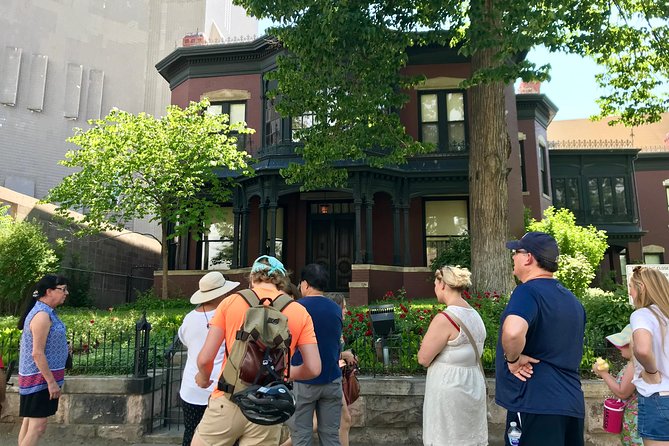
The walk kicks off at Alma Temple, a building with a controversial past. It was built in the mid-1920s, and it still carries an eerie, “read the details” feeling. One specific detail the guide will point out: look for the letters KPOF at the top of the building.
Even if you don’t know the backstory, this stop works as an opener because it trains your eyes. Denver isn’t a city where every landmark is polished and friendly. Some buildings are reminders that history can be messy, and downtown carries those fingerprints.
Possible drawback: this start is mostly outside looking and listening. If you prefer stops where you can fully go inside and roam, this early segment may feel a bit more observational.
Colorado State Capitol: the gold roof and the one-mile marker
Next up is the Colorado State Capitol, the skyline centerpiece with a 24 karat gold top. The guide has you pause in a way that makes the building feel less like a photo spot and more like a place with meaning.
A standout moment here is the one mile above sea level marker. You’ll also get a view angle that frames the Rocky Mountains—the kind of background Denver always uses to remind you you’re in the West, not just a city in the middle of nowhere.
This stop is also where the tour’s “civic Denver” theme really clicks. Government architecture can feel cold on its own, but with the guide’s framing, you start noticing how power, design, and public space were built into the downtown plan.
Civic Center Park and the City Beautiful idea
From the Capitol, you head to Civic Center Park, the focal point of Mayor Robert Speer’s City Beautiful campaign. Completed in 1908, the area functions like an outdoor centerpiece for state and city government.
Here’s why it matters for you: City Beautiful isn’t just a slogan on a plaque. It’s visible in the way the park and surrounding buildings create a civic stage. This is the spot where you can stand back for a minute and see how the downtown layout guides both movement and attention.
This is also one of those pauses that helps you reset. The tour is paced with short visits, so you’re not stuck for a long time at any single point.
The CELL exterior: a strange museum moment (without the entry)
One of the more unusual stops is CELL – The Counterterrorism Education Learning Lab. The building experience here is “odd museum, at best,” and the key point is that you’re mainly viewing it rather than going inside.
Even without entry, the guide will show you an important artifact: one of the remaining pieces of the World Trade Center. That detail turns a quick look at a contemporary facility into something heavier and more meaningful. It’s the tour’s way of bringing Denver’s downtown timeline into a global context, even if you only see it briefly.
If you’re hoping for a full museum visit, temper expectations here. This is a roadside moment for awareness, not a deep museum session.
Denver Art Museum: the Big Sweep and why art matters on this route
You’ll pass through the Denver Art Museum area, and it’s worth treating this as more than a quick glance. The museum has over 70,000 works of art, and the guide focuses your attention on one of its most recognizable pieces: the Big Sweep, often described as the Giant Dustpan and Broom.
This stop pays off because it breaks the rhythm. After the government buildings and civic spaces, the art museum reminds you Denver’s downtown is also a cultural machine. It helps explain why people visit, live, and meet here—not just for politics and commerce.
Related but separate: you may also get a look toward The Kirkland at the Denver Art Museum, which highlights works by local Denver artist Vance Kirkland. In your walk, you won’t go into this space, but the guide will recommend coming back later if you want more detail.
The whole of Denver in one sweep



Leven Deli Co.: a real local pause for cookies and Denver comfort food
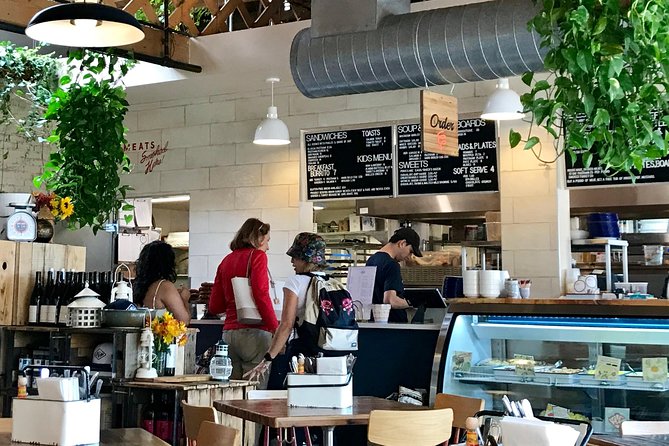
Mid-tour, you get a stop at Leven Deli Co. This is your chance to try something local in a way that feels like Denver, not like a food court built for tourists. The deli is described as a place locals actually frequent, and there’s a specific reason people get excited: the cookies are out of this world.
Important practical note: food and beverages are not included in the tour price. Think of this as your decision point. If you want to snack, you can. If you don’t, you can still treat it as a break and rejoin the walk.
If you’re traveling with kids, this is one of the easiest stops to keep everyone comfortable, since it’s a natural “stand, sit, and regroup” break.
Civic architecture details: the City and County Building and a classic photo pause
The tour then heads to the City and County Building, a curved structure that’s widely treated as one of Denver’s most beautiful civic buildings. In many cities, government architecture is stiff. Here, the design gives the place a more human scale, and you can see it from the street in a way that feels almost cinematic.
The guide also points out a seasonal transformation: during the holidays, the building becomes a center spot for viewing lights. Even if you’re not there in winter, knowing that detail makes the architecture feel alive, not static.
Near the end of the walk, you also stop at 1439 Court Pl, the Curry-Chucovich house. It’s described as the oldest remaining residence in Denver, with Victorian charm and a scandalous past—so it’s both a visual moment and a story moment. This is the kind of stop where you’ll likely want a phone camera ready, because the building’s exterior reads well in photos.
The US Mint exterior: what it is, without the full visit
At the United States Mint at Denver, you’ll get a quick look. The tour notes that this is one of four locations in the U.S., and it’s the largest producer of coins in the world.
You do not go into the Mint on this tour, so this is more of a context stop than a ticketed attraction. But it’s still valuable. It connects Denver’s downtown identity to real production and real industry, not only tourism.
If you’re a coin collector or just love how things are made, you might want to plan a separate time to see Mint activities up close—this tour gives you the orientation.
Center for Colorado Women’s History: a meaningful exterior moment
Another quick exterior stop is the Center for Colorado Women’s History. The guide frames it as the most historically significant home in Denver, and you’ll pause to take in the location and the idea behind it.
You won’t go into the house here, so again, this is about learning where to look later if you want deeper context. But for many people, it adds a needed dimension: downtown Denver isn’t only about government and big institutions. It’s also about the people and stories that power civic culture.
Fire Station No. 1: stepping inside for a souvenir and the trucks
The tour includes an especially fun stop at the Denver Firefighters Museum at Fire Station No. 1. This is often a favorite point because you get a chance to go inside briefly—enough time to grab a souvenir—and you’ll see some antique fire trucks.
One clear note: you won’t tour the entire museum. This is a short, high-impact segment. Reviews also mention the guide keeping the experience comfortable, even in hot conditions, which matters because this is a stop where you might want to linger.
If you like hands-on visuals more than reading plaques, this is one of the best parts of the route.
16th Street Mall and the final payoff at the Brown Palace
As you near the end, you’ll reach 16th Street Mall, a pedestrian-focused stretch closed to street traffic. It’s described as the number one tourist attraction in Denver, with 1.7 miles of restaurants, bars, and shops.
This section helps you switch gears. Up to this point, you’ve been learning the city’s structure. Here, you’re given an easy “what next” choice: keep walking, browse, or use it as a hub for the rest of your trip.
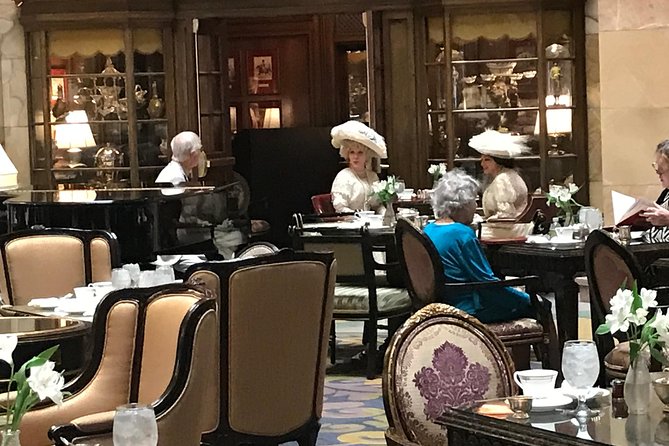
Then comes the closer: The Brown Palace Hotel and Spa. The tour treats it as one of Denver’s crown jewels, built in 1902. The architecture is compared to the Titanic, and the guide often has you take it in from the inside when possible. The hotel has hosted almost every president and dignitary since Teddy Roosevelt, which is a wild way to connect a downtown hotel to national history.
Even if you’ve never thought of Denver as a “grand hotel” city, this stop changes that. You end the tour in a place that feels like it belongs to a bigger story.
Price and value: why $27 can work on a tight schedule
At $27 per person for about 2 hours 20 minutes, this is priced like a smart orientation tool, not a big-ticket attraction. It also includes all taxes, fees, and handling charges, plus a tour escort/host.
Here’s what you’re really paying for: interpretation. Most of the route uses exterior viewing and short pauses, which means you’re not stacking paid admissions. When you see something like the Capitol gold top, the Big Sweep artwork, or the World Trade Center artifact connection, the real value is the guided framing that helps you notice details and place them in a story.
And the guide matters. In the reviews, guides like Bill and Heather show up again and again for energy, humor, and clear pacing. People praise the way guides keep group comfort in mind, including breaks in shade during heat, and the way they point out the best photo angles.
Possible consideration: if you want a tour packed with long museum time inside multiple buildings, you might find the walk gives you more “highlights plus direction” than “hours of deep entry.” You’ll still come away with strong leads for what to do next.
What makes the guides hit different: humor, pace, and hearing the details
Across the guide feedback, a few patterns show up. Bill gets praised for being funny, interactive, and story-rich, with guests mentioning a great mix of humor and history. Heather is frequently mentioned for friendliness, energy, and keeping the walk moving while still covering the key points. Other named guides include Shawn, Kim, and Bob, with praise for how clearly they speak and how they manage sensitive parts of Colorado’s past.
For you, this affects the experience in a practical way. If a guide keeps good volume and enunciation, you don’t waste stops trying to hear. If they build in shade breaks when it’s hot, the walk feels doable instead of punishing. And if they suggest where to go for photos, you get better pictures without turning the tour into a camera scavenger hunt.
Practical tips that actually match this route
This tour stays flexible with weather, so use the forecast. It operates in all weather conditions, so wear what you need for Denver’s swings. Since it’s a walking experience with a moderate fitness level, plan on steady foot traffic and short waiting at each stop.
Shoes matter more than you’d think. You’ll be moving between major sites and civic buildings, then finishing in a pedestrian mall area. Bring a camera-ready approach, too: multiple stops are described as good for photos, including the Capitol marker area and the Curry-Chucovich house exterior.
Also, think about your day structure. Since the tour ends at the Brown Palace Hotel, you can use that as a natural anchor: plan a nearby lunch or evening stroll in the downtown core, or connect to the 16th Street Free Mall shuttle for a quick return. If you prefer rideshare, Lyft or Uber is described as an easy option back to the start.
Should you book the Best of Denver walking tour?
Book it if you want a first-pass Denver experience that gives you structure. It’s ideal if you like stories tied to real places: civic architecture, art landmarks, and quick-but-thoughtful stops that help you understand why downtown feels like it does.
Skip it or pair it with other plans if you’re only interested in paid museum time. This walk is built around exterior viewing, short pauses, and a few carefully chosen moments inside (like the Fire Station stop). You’ll still get strong recommendations for what to return to, but it’s not a full day of ticketed attractions.
If you’re working with limited time, this is one of the clearest ways to get your bearings fast while still feeling like you saw Denver, not just landmarks.
FAQ
How long is the Best of Denver Walking Tour?
It runs for about 2 hours 20 minutes (approx.).
What does the tour cost?
The price is $27.00 per person.
Where does the tour start and end?
It starts at 1340 Sherman St, Denver, CO 80203 and ends at The Brown Palace Hotel and Spa, Autograph Collection, 321 17th St, Denver, CO 80202.
What time does the tour start?
The start time is 10:00 am.
Is admission included for the sights on the walk?
Many stops are listed as free, but some are not included. You will not enter the Denver Mint, the Center for Colorado Women’s History house, or the Denver Firefighters Museum fully, based on the tour notes.
Do you go into the Denver Mint?
No. The tour notes that you do not go into the Denver Mint.
Do you go inside the Fire Station or Firefighters Museum?
You go inside briefly at Fire Station No. 1 to grab a souvenir, but you do not do a full tour of the museum.
Is food included?
Food and beverages are not included. There is a deli stop where you can purchase items on your own.
What should I know about weather?
It operates in all weather conditions, so dress appropriately. If it’s canceled due to poor weather, you’ll be offered a different date or a full refund.
Is tipping expected?
Tips are not expected, but if you feel your guide did an excellent job, you can tip.
More Tour Reviews in Denver
- Discover Rocky Mountain National Park★ 5.0 · 3,419 reviews
- Small Group Tour of Pikes Peak and the Garden of the Gods from Denver★ 5.0 · 3,079 reviews
- Rocky Mountain Escape★ 5.0 · 1,977 reviews
- Downtown Denver Food Tour★ 5.0 · 1,751 reviews
- Red Rocks & Beyond★ 5.0 · 1,583 reviews
Denver End to End
- Footsteps Through Denver: Women, History & Hidden Gems★ 5.0 · 508 reviews
- Denver: City Highlights, Views, and Secret Spots Bus Tour★ 4.8 · 350 reviews
- Best of Denver Bus Tour: Highlights, Views & Local Favorites★ 5.0 · 280 reviews
- The Best of Denver: E-Bike & Bicycle Tour of the Downtown Sites★ 5.0 · 176 reviews
- Denver City Highlights Tour★ 4.5 · 149 reviews
Denver on Foot
- 2 Hour LoDo Historic Walking Tour in Denver★ 5.0 · 1,106 reviews
- Footsteps Through Denver: Women, History & Hidden Gems★ 5.0 · 508 reviews
- Downtown Denver History & Highlights – Small Group Walking Tour★ 5.0 · 285 reviews
- Denver Haunted Booze and Boos Ghost Walking Tour – Lower Downtown★ 5.0 · 278 reviews
- Denver’s Beer and Graffiti Walking Tour★ 5.0 · 138 reviews
Just Added: Fresh Denver Reviews
- Winter fun-Private transportation to Ski, snowmobiling, and dog sledding areas.
★ 5.0 · 3 reviews - Vintner’s Personalized Wine Tasting Experience
★ 4.5 · 3 reviews - Private Jeep Tour to Red Rocks, Dinosaur Ridge, Lookout Mountain
★ 4.5 · 3 reviews - Denver Int’l Airport (DEN) to Aspen Luxury Private SUV
★ 3.5 · 3 reviews - Private Car Service from Denver Int’l Airport (DEN) to Aspen or Snowmass
★ 5.0 · 3 reviews - Breckenridge & Continental Divide – Private Tour
★ 5.0 · 3 reviews
Denver Walking Tours, compared.
 ★ 5.02 Hour LoDo Historic Walking Tour in DenverFrom $301,106 reviews
 ★ 5.0Footsteps Through Denver: Women, History & Hidden GemsFrom $33508 reviews
 ★ 5.0Downtown Denver History & Highlights – Small Group Walking TourFrom $39285 reviews
 ★ 5.0Denver Haunted Booze and Boos Ghost Walking Tour – Lower DowntownFrom $37278 reviews
 ★ 5.0Denver’s Beer and Graffiti Walking TourFrom $58138 reviews
 ★ 5.0Wild West Walking TourFrom $21138 reviews
 ★ 4.8Deep Dive into Denver: Small-Group Walking TourFrom $39119 reviews
 ★ 4.0Denver After Dark Adults Only Walking Ghost TourFrom $3475 reviews
Browse the lists this tour appears in