
Reviewed · DENVER ATTRACTION TICKETS
General Admission to Denver Botanic Gardens Ticket
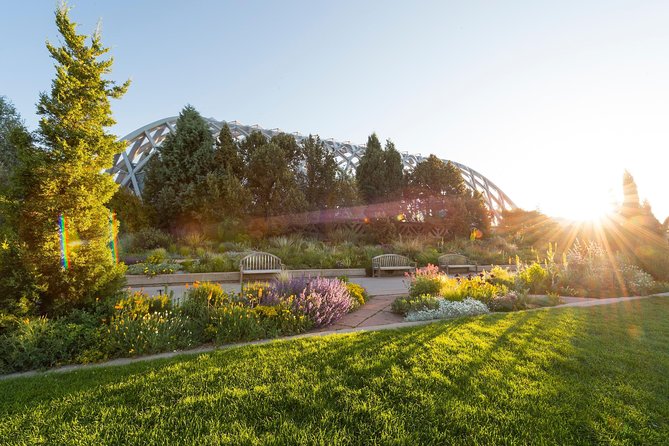
Denver’s botanic gardens are a calm reset. I love how the gardens show off drought-resistant plants that actually thrive in Colorado’s semi-arid conditions, not just survive. I also love that you can see plant species from places like Asia, Patagonia, and Africa while staying right in the city, with clear signage to help you make sense of what you’re looking at. One thing to keep in mind: what looks best depends a lot on season, so winter and shoulder-season visits can feel more about structure and design than peak flower color.
Plan for a relaxed 1 to 3 hours of wandering in a 24-acre urban oasis on York Street near Capitol Hill. You’ll enter with a mobile ticket, and the gardens run in all weather, so dress for the day you get. Families get a big bonus in the Mordecai Children’s Garden, while nearly all paths are wheelchair and stroller friendly, with a few gravel sections and stairs where you’ll want to take an alternate route.
In This Review
- Key things to know before you go
- York Street entry: finding your bearings fast
- General admission value: what your $16.50 covers
- Your 1–3 hour game plan: how to pace the visit
- The living collections: drought-resistant beauty with real Colorado logic
- Mordecai Children’s Garden: play + plant learning (seasonal)
- Global plants, but in Denver’s setting: what to look for
- Art, films, and the Science Pyramid exhibit that adds meaning
- Food stops: Offshoots Café and The Hive Garden Bistro
- Getting around: stroller and walker friendly, with a few caveats
- When to go: season changes what feels like the main event
- Is this worth it for your trip style?
- Should you book general admission to Denver Botanic Gardens?
Key things to know before you go
- Colorado-focused plant design: Collections are chosen to thrive in the state’s high-desert climate.
- Global plants without leaving Denver: You’ll see species from Asia, Patagonia, Africa, and more.
- Great family add-ons: The Mordecai Children’s Garden is seasonal and built for hands-on play and learning.
- Art and science on-site: Expect art exhibitions plus films in the Sturm Family Auditorium and a featured science exhibit in the Science Pyramid.
- Food is available, but not included: You can grab meals and snacks on-site, but plan to pay for them separately.
- Easy to spend half a day (or more): The gardens are laid out for looping and pausing, not a rushed sprint.
York Street entry: finding your bearings fast
Denver Botanic Gardens sits in a real neighborhood, on York Street, close to Capitol Hill. That matters because it’s not just a pretty escape. It’s a place where you can arrive, park or grab transit, and still feel like you stepped into a different pace of life.
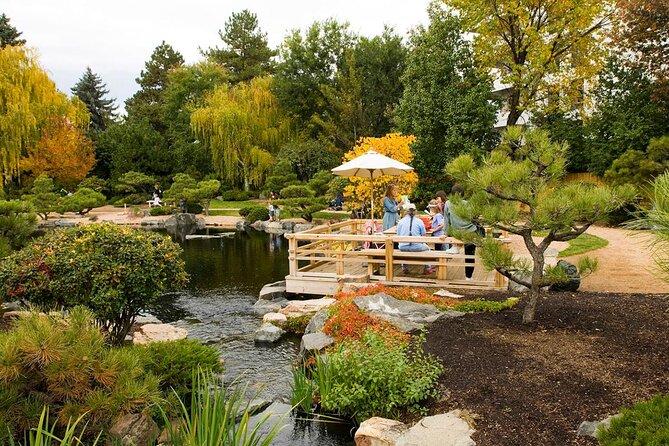
The gardens are organized in ways that make a loop visit feel natural. You’ll find water features, fountains, and seating areas that invite breaks, not just sightseeing. Even on an overcast or chilly day, the garden paths are still enjoyable because you’re surrounded by plant structure—branches, leaf texture, and changing light on water.
If you’re bringing kids or someone who likes frequent breaks, this is a big plus. The layout is built for strolling, and the on-site amenities mean you don’t have to plan your entire day around food logistics.
More passes worth booking
General admission value: what your $16.50 covers
At $16.50 per person for general admission, this is a strong value when you think about how long you can realistically stay. One hour works if you’re efficient. Three hours works if you like to stop, read labels, and take it slow. And if you’re traveling with family, that extra time often turns a quick outing into a “we’re going back next trip” memory.
What’s included is more than just entry. You also have access to things like:
- Limited complimentary parking in the public parking complex
- Art exhibitions
- Films for public viewing in the Sturm Family Auditorium
- The exhibition Welcome Home: Meet Your Habitat in the Science Pyramid
That “included” mix is what makes the price feel fair. You’re not paying for one narrow attraction. You’re paying for a full garden day where art, education, and plant collections all share the same space.
What’s not included is equally important. Food and drinks cost extra, and some special-ticket events aren’t covered. So if you’re hoping to see a holiday light display, or anything explicitly ticketed separately, you’ll want to plan those purchases on top of general admission.
Your 1–3 hour game plan: how to pace the visit
A general admission visit doesn’t come with a single forced itinerary, which is part of the charm. You get to pick your rhythm. That said, having a plan helps you see the big stuff without spending the whole day backtracking.
Here’s a simple approach that works well:
- Start by walking through the main garden areas long enough to get oriented.
- Then pick one or two “deeper” zones to linger in.
- Build in time for at least one sit-down moment—there’s plenty of seating, and it’s worth it.
Because the site is 24 acres, you’ll never feel like you’re seeing everything in a sprint. Even when you move briskly, it still feels like a real stroll. On the other hand, if you only have a short window, you can still craft a satisfying loop without trying to cover every nook.
Also, keep in mind that weather is part of the deal here. Since the gardens operate in all weather conditions, your pace may change. If it’s cold or drizzly, you’ll likely slow down around water features and indoor or covered spots. If it’s sunnier, you’ll naturally want longer pauses under shade trees.
The living collections: drought-resistant beauty with real Colorado logic
Denver Botanic Gardens is famous because it doesn’t treat Colorado like a problem to overcome. It treats it like a design constraint—and that’s where the experience gets interesting.
The gardens’ living collections range from tropics to tundra. That might sound like a tall order, but the key detail is that the plant palette is chosen to thrive in Colorado’s semi-arid climate. In plain terms: you’re looking at plants that make sense for the environment, not a random set of specimens that only look good for a week.
You’ll see drought-tolerant plants that align with what Colorado gardeners already deal with. And you’ll also get plant collections designed to showcase species from around the globe—Asia, the Middle East, South Africa, Patagonia, and South and Central America.
Why this matters for you:
- It helps you understand how gardens can be beautiful without constant heavy irrigation.
- It gives you practical ideas for planting style, even if your home garden is much smaller.
- It makes the labels and educational content more meaningful, because the plants aren’t just “pretty names”—they’re adapted to conditions.
The experience also tends to feel varied without being overwhelming. You can zigzag between sun and shade, and the garden design makes it easy to find spots where you can actually hear birds and water instead of just walking past sights.
Mordecai Children’s Garden: play + plant learning (seasonal)
If you’re visiting with kids, the Mordecai Children’s Garden is one of the easiest “yes, we should go” features. It’s a three-acre space built for hands-on plant education and play, and it sits atop the parking structure.
That location has two practical benefits:
- You don’t waste time searching for it.
- It’s easy to plan a break without losing your place.
It’s also seasonal, operating in spring through fall. If you’re visiting outside that window, you might still enjoy the rest of the gardens, but the children’s portion may not be available in the same way.
For families with strollers, this area is especially helpful because it’s designed for motion and discovery. For families with older kids, it can feel like an outdoor classroom without the bored expression that sometimes comes with that phrase.
Global plants, but in Denver’s setting: what to look for
A big part of the appeal is that you can walk among plant species that feel tied to far-off regions. Rather than just reading a sign and moving on, you can pause and notice how different climates translate into visible plant choices.
You might notice:
- Different textures of leaves and growth habits
- How certain plants handle intense sun and dry air
- Design choices—like water features and shaded areas—that make the site feel cooler and more comfortable
This is also where the garden labels help. The site is set up so you can actually make sense of what you’re looking at as you go. That turns your visit from scenic walking into “I learned something” time without needing a formal guide.





Art, films, and the Science Pyramid exhibit that adds meaning
Denver Botanic Gardens isn’t just about plants. It’s also about learning and culture in the same space.
You’ll find art exhibitions throughout the gardens, and there’s a Sturm Family Auditorium that offers films for public viewing throughout the day. These aren’t just add-ons. They make the gardens feel like a living museum and learning center, not a one-note outdoor attraction.
One particular stop is the Science Pyramid exhibit: Welcome Home: Meet Your Habitat. It’s a great breather when you want to slow down and shift from pure wandering to something more interpretive. Even if you only spend a short amount of time there, it can help you connect the plant displays to bigger themes like how habitats shape what grows where.
If you’re traveling with a mix of adults and kids, this is one of the easiest ways to keep everyone engaged. The plants keep things visually interesting. The science exhibit and films give structure to the day.
Food stops: Offshoots Café and The Hive Garden Bistro
Food isn’t included, but you won’t be stuck figuring it out mid-walk. There are two dining options:
- Offshoots Café, open all year
- The Hive Garden Bistro, open three seasons
In practice, this is perfect for planning. If you’re visiting in colder months, you’re more likely to rely on the café that stays open. If you’re visiting in warmer seasons, you might have more outdoor seating options depending on what’s running.
When you’re deciding how to handle food, think about your pacing. If you’re the type who likes to explore first and eat later, you can do that and still land a nice lunch afterward. If you need steady energy to keep walking comfortably, grab a snack or coffee before you settle into a longer section of the gardens.
Also, one underrated perk: after a meal, you can reset and keep walking without feeling like the day is over.
Getting around: stroller and walker friendly, with a few caveats
Most of the York Street location is wheelchair and stroller accessible, which is a big deal. You will run into a few gravel paths and stairs, but there are different routes you can take to see the area.
Practical advice if you’re using a walker, stroller, or mobility aid:
- Start by choosing the smoothest-looking route first.
- Expect that you may occasionally need to detour.
- Don’t force every path—swap to a route that matches your comfort level.
This kind of planning matters because it keeps the visit relaxing. The gardens have enough “choices” that a detour usually doesn’t feel like a lost hour.
When to go: season changes what feels like the main event
Timing can completely change the mood. In spring and summer, you’re more likely to get that full-on bloom experience. In fall and winter, the gardens can shift toward texture, structure, and design—still beautiful, just different.
Some visits can feel like outdoor art galleries: water features, fountains, clean pathways, and shaded spots for sitting. Other visits can feel more flower-forward. Either way, you’ll still get plant variety and plenty of places to pause.
If you’re traveling in a season where flowers may be limited, don’t let that ruin your expectations. Look for what’s still thriving: forms, labels, water movement, and the overall garden layout. It’s the kind of place where you don’t need peak blooms to have a good time.
Is this worth it for your trip style?
This is a great fit if you:
- Want a low-stress outdoor activity that still feels educational
- Like plant labels and learning as you walk
- Need a half-day plan that works for couples, solo visits, and families
- Appreciate art exhibitions and science elements in the same place
You may want to think twice if:
- You’re only interested in a specific seasonal display, and you’re visiting outside its prime
- You want night events or specialized attractions, since those can require separate ticket types
- You’re sensitive to daily hour changes and timing confusion (it’s smart to double-check before you head over)
One more real-world tip: have your ticket ready on your phone. A mobile ticket keeps things fast, but you should still make sure you’re entering at the correct time and for the right type of admission if you’re planning a particular event.
Should you book general admission to Denver Botanic Gardens?
Yes, I’d book it if you want a classic Denver outing that combines global plant variety with Colorado logic, plus art and science sprinkled throughout. At $16.50, the value comes from the time you can spend and the included extras like films, the Science Pyramid exhibit, and ongoing art displays.
Before you go, do two things: check the season you’re visiting and look closely at whether you’re aiming for any special-ticket event. If you’re just looking for a beautiful, walkable garden day near Capitol Hill, this is one of those tickets that reliably turns into a relaxing afternoon.
More Tour Reviews in Denver
- Discover Rocky Mountain National Park★ 5.0 · 3,419 reviews
- Small Group Tour of Pikes Peak and the Garden of the Gods from Denver★ 5.0 · 3,079 reviews
- Rocky Mountain Escape★ 5.0 · 1,977 reviews
- Downtown Denver Food Tour★ 5.0 · 1,751 reviews
- Red Rocks & Beyond★ 5.0 · 1,583 reviews
More Denver Passes
- BEYOND Light Show & Meditation★ 5.0 · 984 reviews
- Denver: Meow Wolf Convergence Station Ticket★ 4.2 · 212 reviews
- Denver: Downtown Aquarium All-Day Pass★ 4.6 · 167 reviews
- Meow Wolf’s Convergence Station in Denver★ 4.0 · 162 reviews
- Denver: CityPASS® with Access to 3, 4 or 5 Attractions★ 4.7 · 151 reviews
Just Added: Fresh Denver Reviews
- Winter fun-Private transportation to Ski, snowmobiling, and dog sledding areas.
★ 5.0 · 3 reviews - Vintner’s Personalized Wine Tasting Experience
★ 4.5 · 3 reviews - Private Jeep Tour to Red Rocks, Dinosaur Ridge, Lookout Mountain
★ 4.5 · 3 reviews - Denver Int’l Airport (DEN) to Aspen Luxury Private SUV
★ 3.5 · 3 reviews - Private Car Service from Denver Int’l Airport (DEN) to Aspen or Snowmass
★ 5.0 · 3 reviews - Breckenridge & Continental Divide – Private Tour
★ 5.0 · 3 reviews
Denver Attraction Tickets, compared.
 ★ 5.0BEYOND Light Show & MeditationFrom $25984 reviews
 ★ 4.2Meow Wolf Convergence Station TicketFrom $36212 reviews
 ★ 4.6Downtown Aquarium All-Day PassFrom $27167 reviews
 ★ 4.0Meow Wolf’s Convergence Station in DenverFrom $36162 reviews
 ★ 4.7CityPASS® with Access to 3, 4 or 5 AttractionsFrom $52151 reviews
 ★ 4.8Molly Brown House Museum Self-Guided Tour & EntryFrom $15108 reviews
 ★ 4.5BEYOND Light Show and MeditationFrom $25102 reviews
 ★ 4.6Denver Botanic Gardens General Admission TicketFrom $1695 reviews
Browse the lists this tour appears in