
Reviewed · 2-HOUR EXPERIENCES
2 Hour Guided Segway Tour
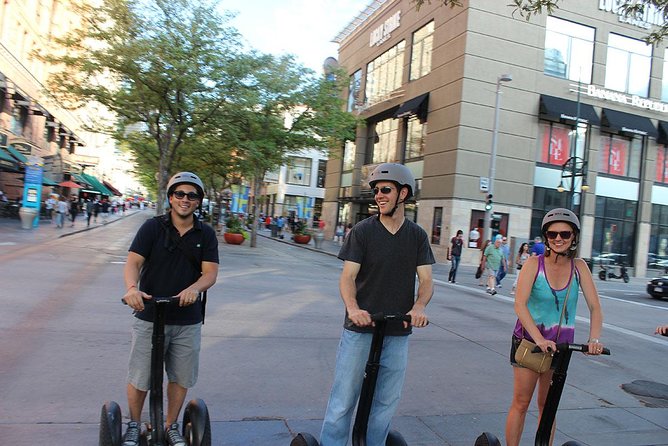
Two wheels, big Denver views, zero fuss. This 2-hour guided Segway tour from Magic Carpet Glide is a fun, fast way to cover downtown highlights without the stop-and-go of walking. I like that the group is capped at six people, so you’re not swallowed by a crowd, and you get a beginner-friendly training period before sightseeing.
You’ll also like the sights packed into the route: LoDo, the Cherry Creek Trail, Confluence Park, the Denver Art Museum, and the Colorado State Capitol on the way back. My one real consideration is that the Segway practice time can feel long—some days it eats more minutes than you’d expect—so the overall value depends on how smoothly the training goes for your group.
In This Review
- Key things worth knowing
- A Downtown Denver Segway Tour That Actually Feels Efficient
- Entering the Segway Zone: Training, Limits, and Safety Reality
- The Start: 16th Street Mall Meeting Spot and How to Find It
- LoDo First: Historic Lower Downtown Energy on Two Wheels
- Cherry Creek Trail: The Smooth Part of the Ride
- Confluence Park: Where You Pause for Photos
- Denver Art Museum to the Colorado State Capitol: Classic Stops, Great Photo Angles
- Price and Value: Is $69 for Two Hours Fair?
- Guide Impact: What Clear Teaching Changes
- Planning Tips That Make or Break the Experience
- Should You Book This Denver Segway Tour?
Key things worth knowing
- Small group (max 6) means more attention and less waiting around
- Training is included, so you’re not just thrown into traffic-level chaos
- Route hits Denver’s top photo stops, including Confluence Park, Denver Art Museum, and the Capitol
- Downtown pace beats walking, especially for getting from LoDo to the Cherry Creek area
- Weather matters, and the tour requires good conditions to run
- Meeting spot can be tricky if construction or crowds are around
A Downtown Denver Segway Tour That Actually Feels Efficient
Denver is great for exploring on foot, but downtown also has a lot of ground to cover. This tour is designed for that exact problem: you cover key areas in a tight loop in about two hours, and you don’t spend that time searching for street parking or doing the “how far is this really?” math.
The small-group cap of six matters more than you’d think. With fewer people, the guide can slow down for questions, get everyone moving with confidence, and keep the route from turning into a long single-file shuffle. If you’ve ever joined a bigger “group tour” and felt like you were just along for the ride, this setup is built to avoid that.
More Denver days made easy with a guide


Entering the Segway Zone: Training, Limits, and Safety Reality
This is billed as beginner-friendly, and the format supports that. You start with a practice/training period before you roll through the city. In a few reviews, people specifically praised guides like Josh for breaking the Segway down into clear, simple instructions, and Z for making sure everyone was comfortable before the group set off.
Here’s what you should plan for:
- You’re learning a new balance skill, even if you’re athletic.
- Training time varies. Some riders felt it took around 30 minutes, which can reduce the sightseeing time you get.
- If you’ve got nerves the first time (totally normal), the best move is to tell your guide and ask for extra time during practice.
A few important boundaries are spelled out for participation:
- Minimum age is 10, with children accompanied by an adult
- Weight range is 75 lbs to 300 lbs
- Not recommended if you have vertigo
- If you have balance issues, expect you might feel more stress than thrill, especially on uneven pavement
Also, don’t treat your wheels like a toy. One rider described getting tripped up after hitting a hole in the sidewalk and later bumping into something landscaping-related. That story doesn’t mean the tour is unsafe—it means you should wear comfortable shoes with good grip and keep your eyes a bit ahead, not just at the Segway screen.
The Start: 16th Street Mall Meeting Spot and How to Find It
You meet at 1350 16th St Mall, Denver, CO 80202, and the tour ends back at that same spot. That “back to where you started” layout is convenient, but it also means your first few minutes matter. One common snag: the meeting area can be a little confusing due to construction and limited parking, especially if you’re not familiar with downtown.
My practical advice:
- Arrive early enough to walk a couple blocks and visually confirm the meetup point.
- If you’re coming by transit, you’re in a good spot because the meeting area is near public transportation.
- If you see a lot of activity around the same time (for example, a major game crowd), give yourself extra buffer. One rider noted route navigation felt more stressful when stadium-area crowds were high.
LoDo First: Historic Lower Downtown Energy on Two Wheels
The tour begins by heading toward Lower Downtown (LoDo), the part of Denver locals refer to when they want you to see the city’s grittier, older, more hangout-focused side. Expect a streetscape vibe with plenty of restaurants and breweries nearby—your senses get involved as you glide along.
What you’re really buying here is motion with context. Instead of doing a random walk, you’re moving as the guide points out what matters along the way. You’ll pass through areas near the ballpark and continue toward a greener, calmer stretch.
Drawback to consider: downtown traffic patterns and crowds can change quickly. If a big event is pulling people into the same areas, your guide may adjust the route so the group can move more smoothly—and you might even get a glimpse of stadium zones that you would otherwise miss.
Cherry Creek Trail: The Smooth Part of the Ride
After LoDo, the tour snakes toward the Cherry Creek Trail. This is where the Segway starts to feel less like a novelty and more like a tool. The trail section gives you:
- A calmer pace than the busiest street corners
- A more scenic ride as you pass along the Cherry Creek area
- Easy opportunities to take photos without constantly stopping
One fun detail from the route description: you’re expected to zip along with the creek scenery—think “moving water” atmosphere while the city falls away in the background. And because you’re not walking the full distance, you get to experience more of the city in less time.
Keep in mind: trail surfaces can still have imperfections. Stay alert for changes in pavement and for anything that might catch a wheel.
Confluence Park: Where You Pause for Photos
You’ll stop at Confluence Park, where the Platte River and Cherry Creek meet. This kind of stop is valuable because it breaks the ride into “experience” mode instead of “transport mode.” You get a moment to:
- Step off mentally, not just physically
- Pull out cameras
- Take in the meeting of waterways before you head back toward the business district
This stop also helps you gauge whether you’re feeling confident on the Segway. If you’re still getting used to balance, Confluence Park is the kind of reset point where the guide can slow things down.
Worth a look before you lock in this Denver tour:

Denver Art Museum to the Colorado State Capitol: Classic Stops, Great Photo Angles
Next up, you roll toward two of Denver’s most recognizable sights:
- Denver Art Museum, with its distinctive look
- Colorado State Capitol, including the gold-crowned centerpiece you’ll want to photograph
This is one reason I think the Segway works so well here. These places are spaced out enough that walking can feel like “mostly transit,” but they’re close enough that a short guided loop keeps you on the move without turning into a stressful sprint.
Photo tip: set up your shot while you’re stopped or moving very slowly. When you’re learning the machine, the urge is to multitask. Don’t. Use the moments when the group pauses so you don’t end up rushing or wobbling.
After the Capitol, the route brings you back toward the business district—and yes, the tour ends back at the original meetup point.
Price and Value: Is $69 for Two Hours Fair?
At $69 per person, this is not a bargain-basement activity. But it can still be a good value if you want a guided highlight loop and you’re not trying to DIY it with transit or rideshare.
Here’s how I’d judge the price fairly:
- You’re paying for the guide + the Segway + the training, not just for sightseeing
- Small group (max 6) can justify the cost because you’re more likely to get personalized help
- Two hours is short, so the training-to-sightseeing ratio becomes the whole game
If the training portion is closer to the shorter end of the range (and your group gels quickly), you’ll feel like you got a satisfying hit of downtown Denver. If training runs longer than expected, you may wish you had a bit more time for photos, extra stops, or slower cruising.
Also consider that the tour is popular enough that it’s often booked in advance (around 15 days on average). That doesn’t guarantee your exact guide or route, but it’s a sign the format works for a lot of people.
Guide Impact: What Clear Teaching Changes
In your head, a Segway tour sounds simple. In real life, it’s a balance-and-confidence game. That’s where the guide makes the difference.
Two guide names show up in the experience descriptions:
- Josh, praised for patient, simple instruction and for sharing facts along the route
- Z, praised for making sure riders felt comfortable before moving out
What I take from that as a traveler: ask questions early, especially about turns and stopping. If your group is large (even at six, still a group), the guide’s pacing and direction style will matter.
One practical “learn this lesson early” tip came up in feedback too: some riders wanted clearer turning directions. So don’t assume you’ll intuit every move. Confirm what the next action is before you commit the Segway.
Planning Tips That Make or Break the Experience
These are the details that help you avoid the most common headaches:
- Bring comfy footwear. The tour involves real streets and pavement, and a rider story included getting tripped by a hole.
- Weather counts. The experience requires good weather. If it’s hot, consider starting earlier; one tip from experience notes: a sunny day tour at 10am can feel more comfortable than later in the afternoon.
- Watch the meeting area. Construction and crowding can make it harder to park and spot the exact meetup point.
- Confirm your Segway works smoothly. If a machine has issues, it can delay the start or make practice more stressful. One description mentioned a situation where the group had to start over because of functional Segways.
- Don’t over-plan a tight schedule after. The tour ends back where you start, but if your group starts late due to early-day issues, you’ll feel it more because the total time is only about two hours.
Should You Book This Denver Segway Tour?
I’d book it if you want an efficient, guided way to see major downtown anchors—LoDo, Cherry Creek Trail, Confluence Park, Denver Art Museum, and the Colorado State Capitol—without spending half your time walking.
I’d think twice if:
- You have vertigo or significant balance concerns
- You hate short, timed tours where training time can eat into sightseeing
- You’re arriving at a chaotic time and can’t handle the meeting spot being slightly hard to find
If you go in with the right mindset—expect practice first, ride steadily, and save your camera work for the stops—this is the kind of Denver activity that gives you a lot of “I saw that” moments in a short window.
Easier With a Denver Guide
- Guided Hiking Tour in Colorado Rocky Mountains View of Mt BlueSky★ 5.0 · 366 reviews
- Denver: Molly Brown House Museum Self-Guided Tour & Entry★ 4.8 · 108 reviews
- Denver’s Highlights and Hidden Gems Guided E-Bike Tour★ 5.0 · 102 reviews
- Denver: Denver Terrors Guided Ghost Tour★ 4.4 · 83 reviews
- From Denver: Breckenridge and Rocky Mountains Guided Tour★ 4.8 · 79 reviews
More Tours in Denver
- Small Group Tour of Pikes Peak and the Garden of the Gods from Denver★ 5.0 · 3,079 reviews
- Downtown Denver Food Tour★ 5.0 · 1,751 reviews
- Twilight Ghost Tour★ 5.0 · 1,437 reviews
- The EDGE: Zip Line Tour★ 5.0 · 1,153 reviews
- 2 Hour LoDo Historic Walking Tour in Denver★ 5.0 · 1,106 reviews
More Tour Reviews in Denver
- Discover Rocky Mountain National Park★ 5.0 · 3,419 reviews
- Small Group Tour of Pikes Peak and the Garden of the Gods from Denver★ 5.0 · 3,079 reviews
- Rocky Mountain Escape★ 5.0 · 1,977 reviews
- Downtown Denver Food Tour★ 5.0 · 1,751 reviews
- Red Rocks & Beyond★ 5.0 · 1,583 reviews
Just Added: Fresh Denver Reviews
- Winter fun-Private transportation to Ski, snowmobiling, and dog sledding areas.
★ 5.0 · 3 reviews - Vintner’s Personalized Wine Tasting Experience
★ 4.5 · 3 reviews - Private Jeep Tour to Red Rocks, Dinosaur Ridge, Lookout Mountain
★ 4.5 · 3 reviews - Denver Int’l Airport (DEN) to Aspen Luxury Private SUV
★ 3.5 · 3 reviews - Private Car Service from Denver Int’l Airport (DEN) to Aspen or Snowmass
★ 5.0 · 3 reviews - Breckenridge & Continental Divide – Private Tour
★ 5.0 · 3 reviews
2-Hour Experiences, compared.
 ★ 5.02 Hour LoDo Historic Walking Tour in DenverFrom $301,106 reviews
 ★ 5.0Clear Creek Intermediate 2h 30m Rafting Trip – Idaho Springs, COFrom $9922 reviews
 ★ 5.02 Hours of Mindful Bird Watching near DenverFrom $5019 reviews
 ★ 5.0Clear Creek Classic 2h 30m Rafting Trip – Idaho Springs, COFrom $8219 reviews
Browse the lists this tour appears in