
Reviewed · RED ROCKS & DINOSAUR RIDGE TOURS
Rockies to the Red Rocks Train – Denver to Moab – SilverLeaf Plus
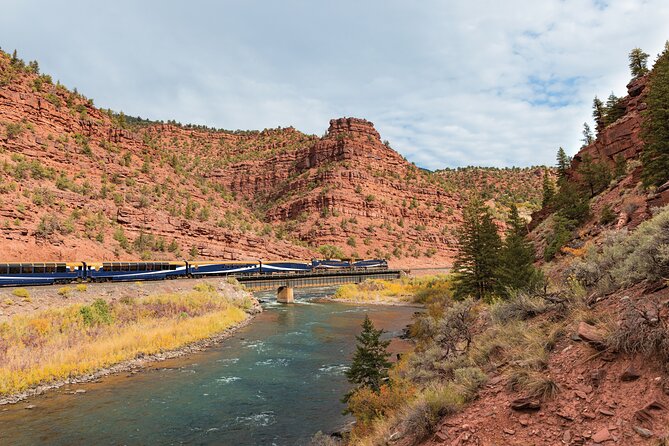
A train through the American West hits different. This two-day rail-only ride from Denver to Moab strings together the Rockies, Continental Divide country, and red-rock Utah—without you steering a thing. I love the SilverLeaf Plus lounge car for breathing room and those small outdoor viewing breaks, and I love that meals and drinks come to your seat instead of turning sightseeing into a food hunt. The main catch: the schedule is fixed, so if you want lots of independent stops, this isn’t that kind of trip.
Before the rail day even starts, you get a quick motorcoach tour through Denver’s River North Art District (RiNo) and then settle into a journey guided by onboard Hosts. Expect a small group size—max 15—plus complimentary baggage transfers so your luggage doesn’t become your second job. Plan on spending most of your time on the train, because that’s where the best views live.
In This Review
- Key things I’d focus on before you book
- SilverLeaf Plus: why this train ride feels more like a retreat than a commute
- RiNo to the Big 10 Curve: your day starts with Denver’s art side and a real rail lesson
- The Moffat Tunnel and the Continental Divide: the route’s most dramatic engineering moment
- Gore Canyon, Byers Canyon, and the Colorado River canyons you can’t reach by car
- Glenwood Springs overnight: a simple reset in a spa-town break
- Day 2 breakfast and the slow reveal of Utah’s red-rock world
- From canyons to arches country: Cisco, Thompson Springs, and the Moab approach
- Moab arrival and how to turn this rail trip into real park time
- Price and value: what $2,327 per person buys (and what it doesn’t)
- Who this Denver to Moab rail route fits best
- Should you book this Rockies to the Red Rocks journey?
- FAQ
- How long is the Denver to Moab rail journey?
- What time does the experience start in the morning?
- Is lunch included?
- Is breakfast included?
- Where do you stay overnight?
- What is SilverLeaf Plus?
- Is WiFi available onboard?
- How is luggage handled?
- What luggage limits apply?
- Is the booking refundable or changeable?
- Is a service animal allowed?
Key things I’d focus on before you book
- SilverLeaf Plus lounge car access with extra space and a small outdoor viewing area
- Seat service meals and premium drinks, including signature cocktails and premium alcoholic beverages
- Continental Divide crossing via the Moffat Tunnel (6.2 miles), a real railroad milestone
- Gore Canyon pass-through with towering cliffs (the train passes; it doesn’t stop)
- One-night Glenwood Springs stay in a moderate, clean, comfortable hotel with essential amenities
- Complimentary baggage handling (plus a clear luggage limit)
SilverLeaf Plus: why this train ride feels more like a retreat than a commute
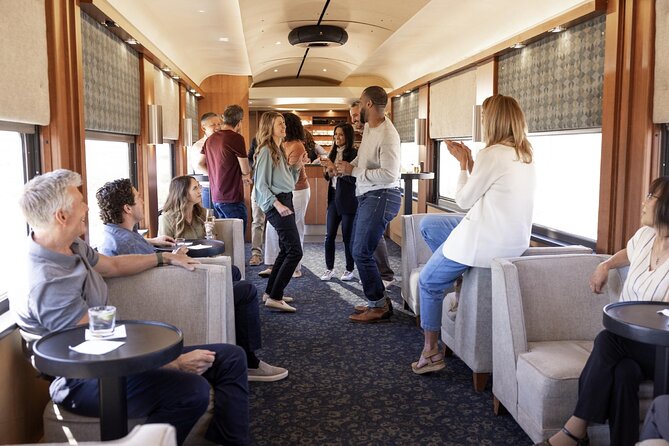
Rocky Mountaineer’s SilverLeaf Plus is built around one idea: make your day easy. You get exclusive access to a lounge car, not just standard seating. That matters because on long sightseeing routes, you want options—sit down, change your angle, grab a drink, and still keep the view flowing in.
A small outdoor viewing area in the lounge car is also a big deal. Even if you love the indoor comfort, sometimes you just want air and a wider sense of scale—especially when the scenery suddenly turns dramatic. Add the onboard Hosts, and the day stops feeling like you’re trapped on rails. You’re guided, fed, and checked in on.
Food and drink are part of the pacing. Your day includes delicious meals and beverages served right to your seat, and SilverLeaf Plus adds premium alcoholic beverages and signature cocktails. If you’re the sort of person who likes a drink with a view, this is where the upgrade shows.
On top of that, there’s complimentary baggage transfers to your midpoint lodging in Glenwood Springs. You keep the luggage rules simple: up to two pieces per person, with a total max weight of 30 kg / 60 lbs, and no single piece over 23 kg / 50 lbs.
Red Rocks and the hogback, a few more
RiNo to the Big 10 Curve: your day starts with Denver’s art side and a real rail lesson
The experience begins before you ever see the Rocky Mountaineer interior. You’ll take a motorcoach transfer through Denver’s River North Art District—known locally as RiNo—famous for creative businesses and colorful street art murals. It’s a quick palate-cleanser: you get city energy before the train swaps asphalt for big open skies.
Then you board and settle into the Rocky Mountaineer rhythm. One of my favorite details here is that the route isn’t just scenic—it’s engineered to be gentle. You’ll pass the Big 10 Curve, a tight 10-degree radius curve designed to add mileage while keeping the grade at a railroad-friendly 2%. It’s the kind of nerdy fact that makes the ride feel smart, not accidental.
As the train heads toward the foothills, you’ll catch glimpses of Boulder, with the famous Flatirons where the mountains meet the plains. Next comes the Gross Reservoir Dam, which you’ll see as you gain elevation—an easy visual reminder that water management is part of this region’s story, not just the view.
The Moffat Tunnel and the Continental Divide: the route’s most dramatic engineering moment
Few rail segments feel as “you’re crossing into a different world” as the Moffat Tunnel. You’ll travel through 6.2 miles of mountainous terrain, crossing the Continental Divide. You don’t need to know the maps to feel it. The ride changes tempo, the scenery tightens, and when you come out, it feels like you just turned a page in a book.
Right after the tunnel, the route opens up toward mountain-resort country, with Winter Park appearing in the mix. This section helps you understand why rail travel works here: you don’t just move through space—you move through elevation changes that would be tedious by car.
The Colorado River then becomes your recurring companion. The train follows it for a long stretch, and you’ll see why this river is such a magnet for rafting and other water adventures. In some spots, you might even notice rafters in action and the playful ways they interact with the train.
Gore Canyon, Byers Canyon, and the Colorado River canyons you can’t reach by car
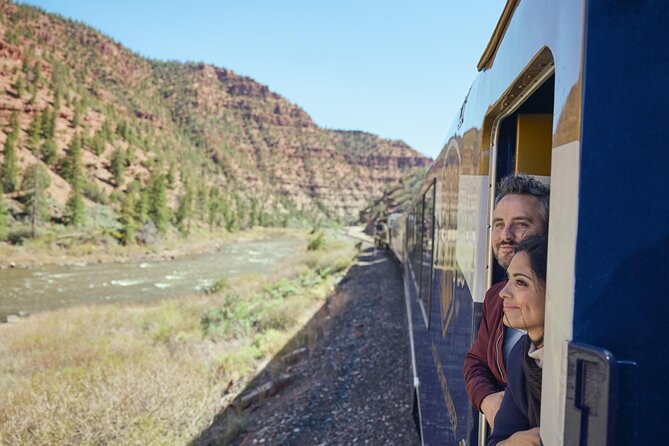
Day 1 is basically a canyon highlight reel, and the route is set up for viewing from your seat. You’ll pass through Byers Canyon, a rugged stretch where wildlife is possible—so keep an eye on the banks and slopes, not just the center channel. Then comes the bigger, louder scenery: Gore Canyon.
Gore Canyon is the dramatic one: surrounded by over 1,000-foot-tall cliffs. It’s also split into two parts—upper and lower. Here’s the practical note: the train passes through it, so you won’t get a platform moment or a stop-and-stretch break. You’ll see it from the carriage as it slides by, which can actually be a plus if you prefer continuous momentum over logistics.
Another canyon stretch on Day 1 is the largest in Upper Colorado—the one the train passes by without stopping. The main idea is that this route prioritizes view corridors that are simply too difficult to access by road. In plain terms: if you try to replicate this drive-style, you’ll spend more time on roads and searching for viewpoints than you will enjoying the ride.
Also worth noting: this isn’t a one-off view. You get repeated glimpses of the river and canyon system as the day rolls along. That repetition helps your brain “map” the region. After a while, it starts to feel like you’re learning a geography lesson while watching a movie.
Glenwood Springs overnight: a simple reset in a spa-town break
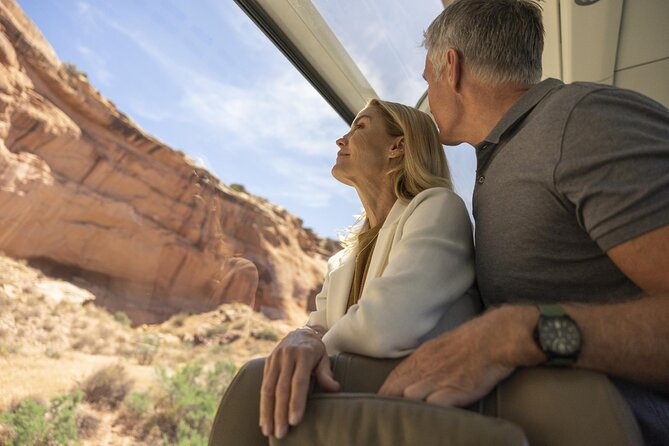
By evening, you arrive in Glenwood Springs, one of those towns that’s grown around comfort and access. You disembark and move into your hotel stay in a moderate, clean, comfortable accommodation with essential amenities and solid service. Your specific hotel assignment is provided a few days before departure and shown on your boarding pass when you check in.
This night is more than just a bed. It breaks up the two-day rail rhythm, so you don’t feel like you’re carrying canyon fatigue into more canyon watching. Glenwood Springs also gives you options once you’re off the train. The plan includes time to relax in your room, and you can also enjoy a soak at the Glenwood Springs Hot Springs if you want to end the day the way this town expects you to.
If you’re wondering why a midpoint hotel matters, here’s the value: you avoid the “all-in-one-day” grind. You still get big scenery, but you also get a chance to reset before Day 2 pushes toward red rocks.
Day 2 breakfast and the slow reveal of Utah’s red-rock world
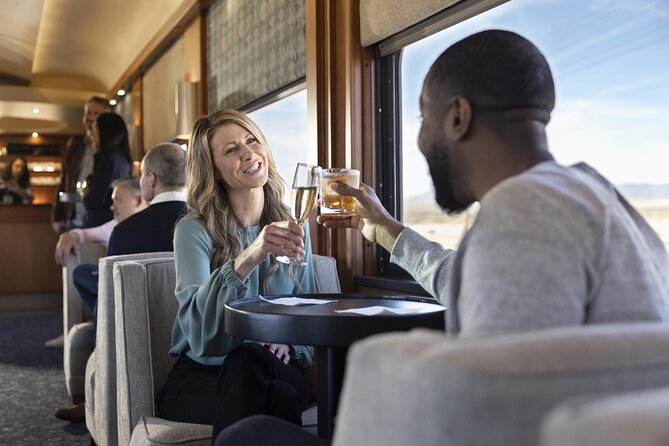
You start the second day with a two-course hot breakfast with locally sourced ingredients. It’s timed so you’re fueled before the ride shifts southwest. You’ll keep cruising past mountain vistas and desert cliffs—so the country is changing under you even before Moab appears on the horizon.
Early on, the train passes through New Castle, with the Colorado River flowing through town. This area is a popular spot for trout fishing, rafting, and kayaking, and the information also suggests chances of seeing wildlife like deer, elk, and even black bear—so scanning the banks is worthwhile.
Next comes Parachute Creek and Mount Logan toward De Beque Canyon, a 15-mile narrow canyon with stair-step layers of sedimentary rock. That’s one of those sections where the canyon walls look “stacked.” Rail viewing helps because you get long stretches to read the layers as they move past.
As you continue, you reach Grand Junction, formed at the confluence of the Gunnison River and the Grand River (the Colorado River was once called the Grand). Then there’s Fruita, a town surrounded by mesas and known for dinosaur fossils. Fruita also gets extra personality from the story of Mike the Headless Chicken and a May festival held in his memory.


From canyons to arches country: Cisco, Thompson Springs, and the Moab approach
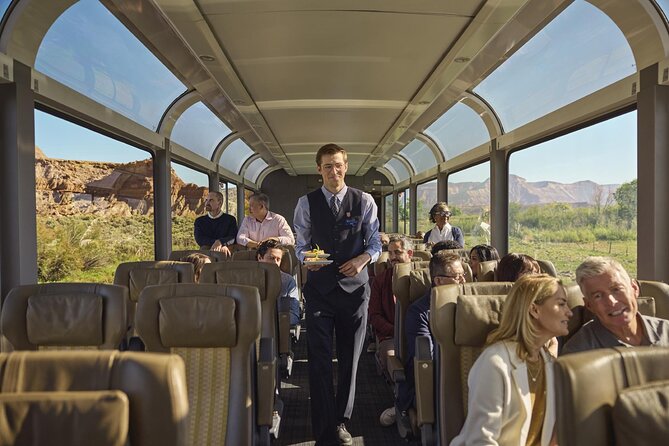
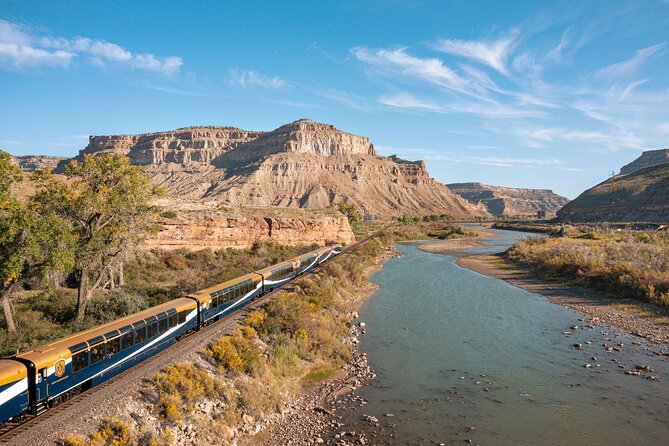
Day 2 keeps trading cliff views for character towns. You’ll pass through a part of the Colorado River corridor with red sandstone cliffs and a 25-mile / 40-kilometer canyon stretch where rafting is popular and the area is otherwise largely inaccessible. The train window becomes your shortcut to a place most people can’t easily reach.
Then the route heads into Utah through remnants of railroad-era life. Cisco, Utah was once a thriving stop for steam engines, but the story changed with the construction of Interstate 70. Nearby Thompson Springs, Utah follows a similar theme: few buildings remain, and it sits within Thompson Canyon.
The approach to Moab is where the trip starts to feel like the cover of a guidebook. You’ll see breathtaking red rock formations as you pass by Arches National Park. In the distance, the La Sal Mountains appear—Utah’s second-highest mountain range—and they give you that classic contrast: high peaks framing red-rock basins.
When you arrive, Moab is waiting as the gateway to Utah’s Mighty 5 national parks. From Moab, it’s your launching point for Arches, Bryce Canyon, Canyonlands, Capitol Reef, and Zion—all of them within driving distance, but accessed best with your time managed well. Arriving by rail also changes your starting point mindset. You don’t “start” your adventure by fighting traffic; you start it already impressed.
Moab arrival and how to turn this rail trip into real park time
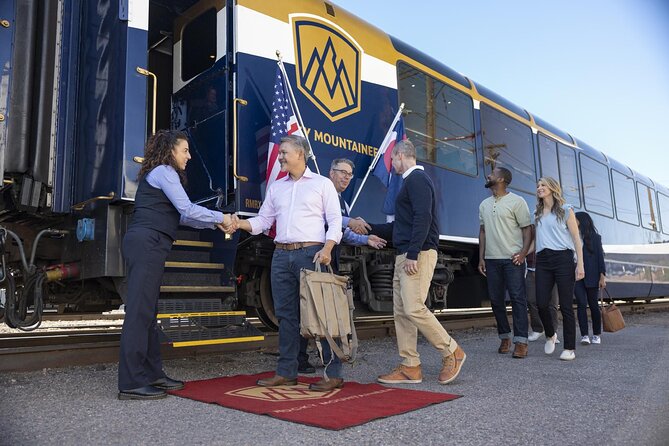
Your rail experience ends at Rocky Mountaineer’s Moab Guest Centre address, with the tour disembark point at the Hoodoo Moab Hotel for guests heading westbound from Denver. From there, you’re set up to transition into your own plans—park days, scenic drives, and hikes that match your energy.
Here’s the practical value of arriving this way: you’ve already logged long hours of moving scenery without the stress of driving. That means your first full day in Moab can be about making choices—what to do first, where to park, and which hike fits your legs.
Also, because this journey is rail-only, your time in the corridor is maximized. You’re not wasting daylight pulling off for viewpoints every 20 minutes. You get long, continuous sightlines where the canyon walls and river bends just keep unfolding.
Price and value: what $2,327 per person buys (and what it doesn’t)
At $2,327 per person, this isn’t a casual weekend. But it’s also not just “a seat on a train.” Here’s what your money is supporting:
- Two full days on Rocky Mountaineer between Denver and Moab
- Meals and beverages served to your seat (Day 1 includes lunch with snacks and drinks throughout; Day 2 includes two-course hot breakfast)
- One night of hotel lodging in Glenwood Springs
- SilverLeaf Plus upgrades, including lounge car access and premium alcoholic beverages with signature cocktails
- Engaging storytelling and world-class service from onboard Hosts
- Complimentary baggage transfers and luggage handling to and from the midpoint accommodation
- Gratuities included, so you’re not doing mental math mid-trip
- Restroom on board
What’s not included is also worth knowing up front. You’ll need to arrange your own pre- and post-trip lodging, and WiFi is not included on board. Airfare or other connecting transportation is not part of the package either. And like most premium rail products, this is effectively non-flexible once booked: the experience is non-refundable and cannot be changed for any reason.
So the real value question is simple: do you want to pay to avoid driving time and enjoy a high-service rail day? If yes, the price can make sense fast. If your priority is independence and roadside exploring, you might feel boxed in.
Who this Denver to Moab rail route fits best
This route is for you if you want to:
- See big canyon country and red-rock approaches without driving for hours at a time
- Prefer comfort and service over rugged self-navigation
- Like the idea of a small group experience (max 15) with Hosts guiding the ride
- Enjoy seat service and don’t want to plan around where to eat
It also suits couples and solo travelers who appreciate a structured itinerary. If your trip style is “set a plan, then relax,” you’ll likely enjoy how the train handles the heavy lifting.
One more note: the onboard experience includes a restroom on board and allows service animals. That’s useful for planning your comfort level.
Should you book this Rockies to the Red Rocks journey?
I’d book this route if you’re excited by views you can’t easily replicate by car and you want a smooth, high-comfort two-day plan with great food. The biggest selling points are the SilverLeaf Plus lounge upgrade and the way the day is handled end-to-end: meals to your seat, attentive Hosts, and baggage handled for you.
Skip it—or at least think twice—if you’re the type who wants frequent stops, lots of off-train wandering, or a trip that you can casually reshape day by day. This is rail-first travel, and the payoff is best when you buy into that rhythm.
FAQ
How long is the Denver to Moab rail journey?
The trip is about 2 days.
What time does the experience start in the morning?
The start time is 8:30 am.
Is lunch included?
Yes. Lunch is included.
Is breakfast included?
Breakfast is listed as optional in the included items. Day 2 also features a two-course hot breakfast as you depart Glenwood Springs.
Where do you stay overnight?
One night of accommodation is included in Glenwood Springs. The hotel is moderate, clean, and comfortable with essential amenities.
What is SilverLeaf Plus?
SilverLeaf Plus includes exclusive access to a lounge car with extra space and a small outdoor viewing area, plus premium alcoholic beverages and signature cocktails.
Is WiFi available onboard?
WiFi on board is not included.
How is luggage handled?
Baggage transfers are complimentary, and luggage handling to and from the midpoint accommodations is included.
What luggage limits apply?
You can bring up to two pieces of luggage per person, with a total max of 30 kg (60 lbs) per person, and each piece must be no more than 23 kg (50 lbs).
Is the booking refundable or changeable?
No. The experience is non-refundable and cannot be changed for any reason.
Is a service animal allowed?
Yes, service animals are allowed.
If you want, tell me your travel dates and whether you’re more “parks and hikes” or “scenic drives and easy walks,” and I’ll suggest a simple plan for your Moab days after the train.
More Tour Reviews in Denver
- Discover Rocky Mountain National Park★ 5.0 · 3,419 reviews
- Small Group Tour of Pikes Peak and the Garden of the Gods from Denver★ 5.0 · 3,079 reviews
- Rocky Mountain Escape★ 5.0 · 1,977 reviews
- Downtown Denver Food Tour★ 5.0 · 1,751 reviews
- Red Rocks & Beyond★ 5.0 · 1,583 reviews
Red Rocks and Dinosaur Ridge
- Red Rocks & Beyond★ 5.0 · 1,583 reviews
- Shared Half-Day Mountain Tour in Red Rocks Evergreen and Echo Lake★ 5.0 · 821 reviews
- Visit Red Rocks Park, Continental Divide & Breckenridge★ 5.0 · 765 reviews
- From Denver: Red Rocks, Evergreen, and Echo Lake Tour★ 4.9 · 597 reviews
- Mount Blue Sky Alpine Summit & Red Rocks Tour from Denver★ 5.0 · 120 reviews
Just Added: Fresh Denver Reviews
- Winter fun-Private transportation to Ski, snowmobiling, and dog sledding areas.
★ 5.0 · 3 reviews - Vintner’s Personalized Wine Tasting Experience
★ 4.5 · 3 reviews - Private Jeep Tour to Red Rocks, Dinosaur Ridge, Lookout Mountain
★ 4.5 · 3 reviews - Denver Int’l Airport (DEN) to Aspen Luxury Private SUV
★ 3.5 · 3 reviews - Private Car Service from Denver Int’l Airport (DEN) to Aspen or Snowmass
★ 5.0 · 3 reviews - Breckenridge & Continental Divide – Private Tour
★ 5.0 · 3 reviews
Red Rocks & Dinosaur Ridge Tours, compared.
 ★ 5.0Red Rocks & BeyondFrom $1041,583 reviews
 ★ 5.0Shared Half-Day Mountain Tour in Red Rocks Evergreen and Echo LakeFrom $95821 reviews
 ★ 5.0Visit Red Rocks Park, Continental Divide & BreckenridgeFrom $138765 reviews
 ★ 4.9From Denver: Red Rocks, Evergreen, and Echo Lake TourFrom $84597 reviews
 ★ 5.0Mount Blue Sky Alpine Summit & Red Rocks Tour from DenverFrom $199120 reviews
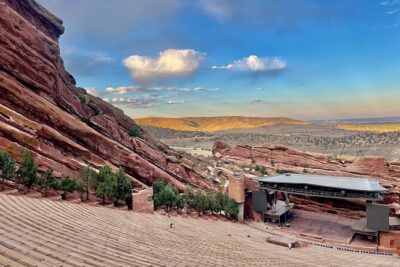 ★ 5.0Red Rocks Morning HikeFrom $119110 reviews
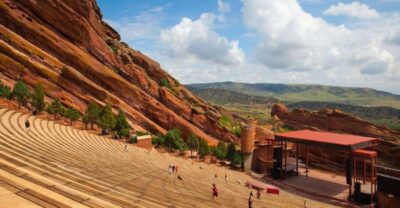 ★ 4.9From Denver: Red Rocks and Foothills Half-Day Guided TourFrom $9570 reviews
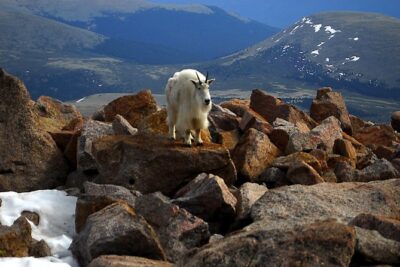 ★ 4.5Mount Blue Sky, Clear Creek Canyon & Red Rocks Park (Mount Evans)From $14956 reviews
Browse the lists this tour appears in